Logistics Yard
The underrated opportunity for humanoid deployment.
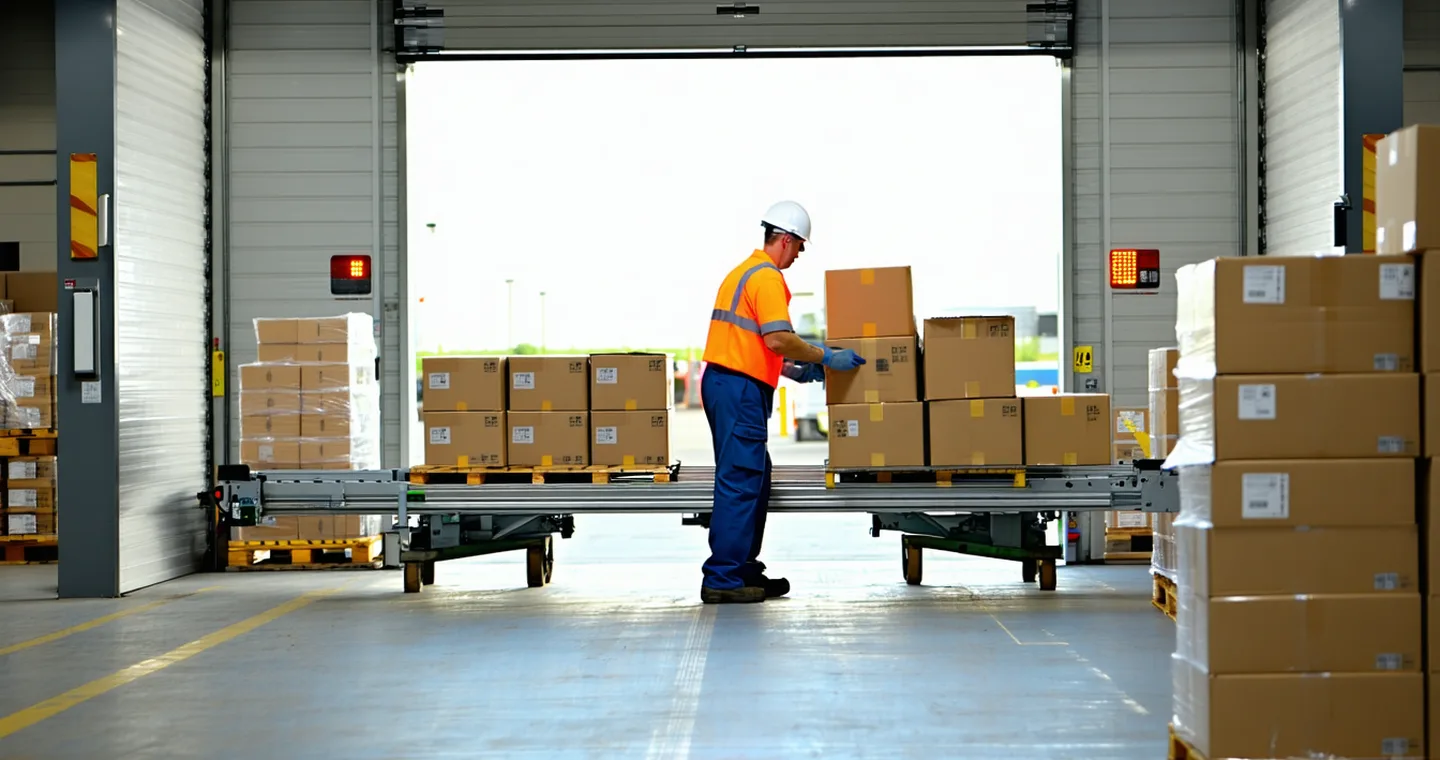
Warehouses get the automation investment because the environment is predictable: fixed rack geometry, known SKU dimensions, controlled lighting. Logistics yards — truck docks, sorting lines, transfer points between inbound and outbound — are where none of those conditions hold. Carton dimensions vary every vehicle. Routing configurations change with the shift schedule. Vehicle traffic makes fixed automation impractical. This is the environment Atom was designed for.
Task coverage
What Atom handles in the logistics yard
Carton pick-and-place
Picking variable-weight cartons from incoming conveyor and placing them on pallets or outbound lanes. The core challenge is handling cartons that vary in weight from 0.5 kg to near the 10 kg payload limit, in dimensions that change between every pick cycle, without a grip reconfiguration step. Atom's compliant grasp adjusts grip force dynamically based on tactile feedback — the same fingertip sensing that catches slippage before a drop occurs.
Sort-to-lane routing
Reading destination labels and routing parcels to the correct outbound lane. Atom's RGB vision classifies label content during the pick motion — no separate scanning station required. Sort rules can be updated via the task adaptation system as routing configurations change.
Bin and tote transfer
Moving partially filled bins between locations — the logistics equivalent of assembly line subcomponent transfer. Particularly valuable at truck docks where bins must be moved between vehicle and belt quickly as loading windows are narrow.
Side-by-side with human operators
Logistics yards are active human environments — forklifts, trolleys, and floor staff moving in all directions. Atom's proximity sensing and human-detection cutoff are specifically designed for this environment. It yields when humans approach and resumes without supervisor input.