Assembly Line
Working the stations between the automated islands.
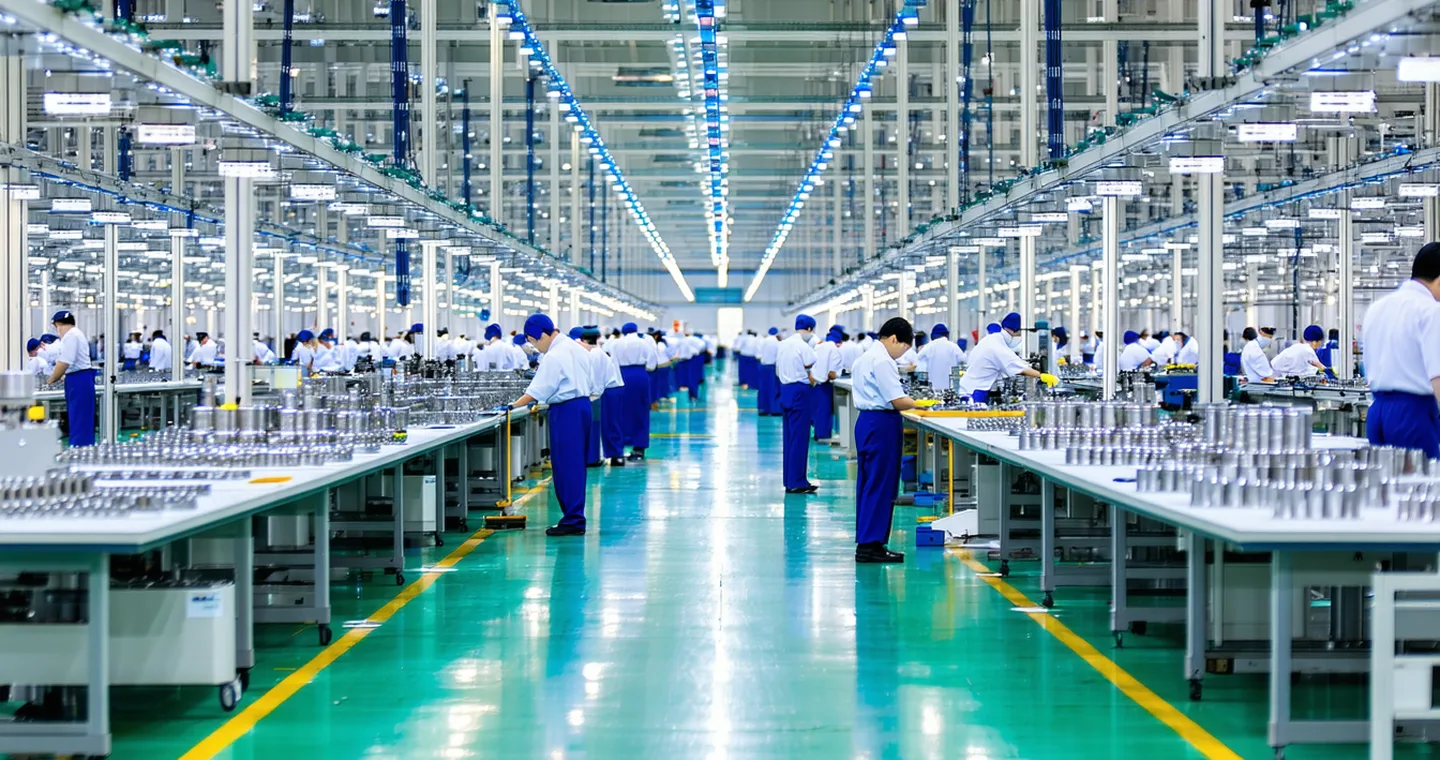
Japanese assembly lines are organised as a mix of fixed automated islands and manual workcells. The automated islands handle high-volume, fixed-geometry operations. The manual workcells handle everything between them — and that gap is where Japan's labour shortage is sharpest. Atom is designed for the manual workcells, not the automated islands.
Task coverage
What Atom handles on the assembly line
Bolt assembly and fastener driving
Torque-controlled fastening to specified seating values. Atom's proprioceptive torque sensing in the wrist joints measures actual applied torque at 1 kHz — confirming correct thread engagement and seating without a secondary torque-check step. Over-torque events and missed threads are flagged immediately, before the part moves to the next station.
Subcomponent transfer between stations
Moving partially assembled components between workcells while maintaining orientation and handling integrity. On cell-based Japanese assembly lines, this transfer step recurs dozens of times per shift — it requires bilateral arm coordination and spatial reasoning that conveyors cannot replicate because timing and orientation vary with each preceding operation.
Quality check positioning
Holding components in precise orientations for visual inspection without introducing handling damage. Particularly valuable for components too irregular in shape for fixture-based holding.
Kit preparation and tray loading
Picking components from bulk supply and arranging them in kitted trays for downstream assembly stations. Requires sequential multi-object manipulation — the type of task that kaizen programmes have traditionally assigned to the most experienced operators because it requires remembering the kit spec while handling the parts. Atom's task adaptation system encodes the kit specification into the motion policy, removing the working-memory requirement from the task entirely.